
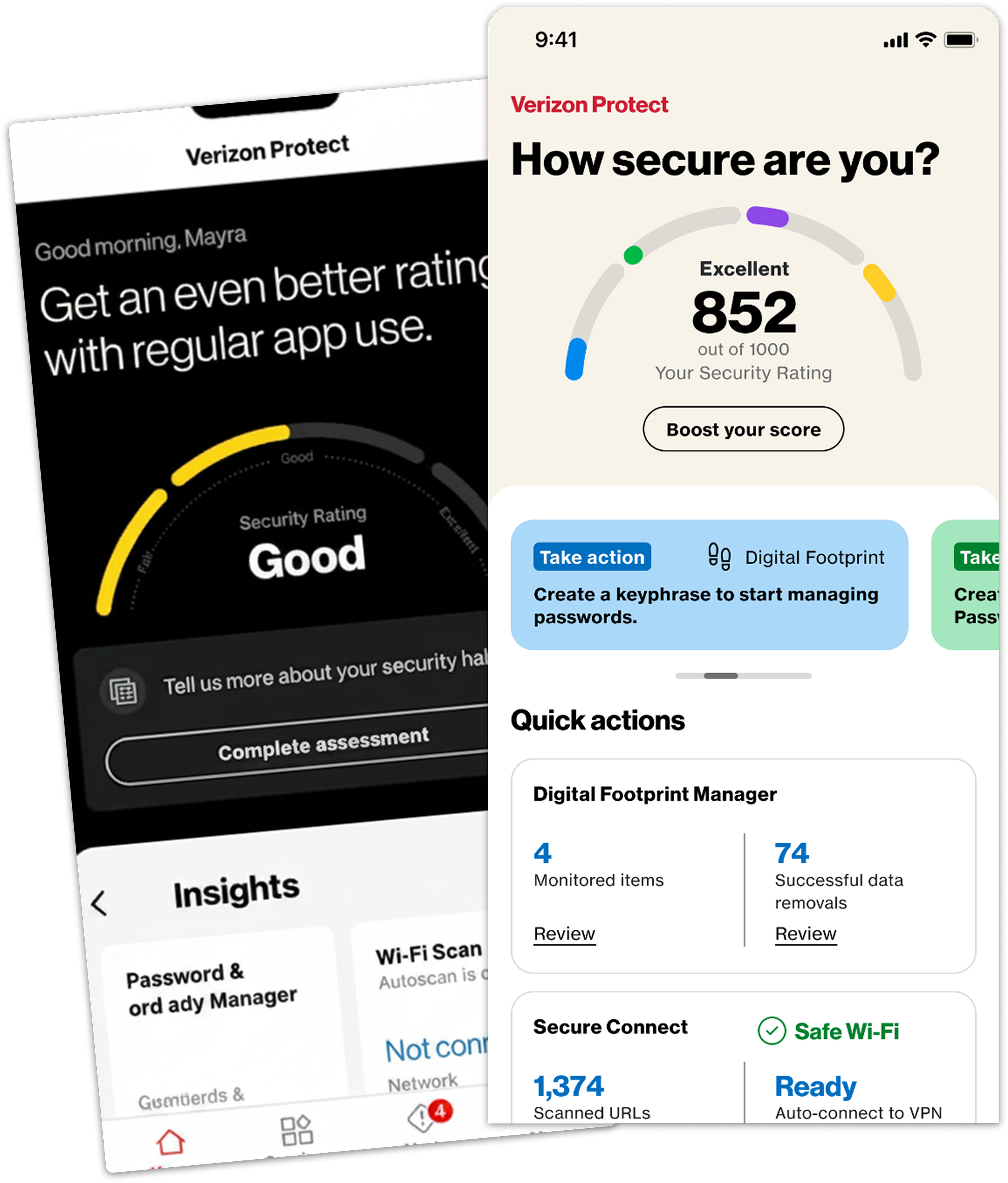
Simplifying a fragmented security ecosystem through personalization, information architecture, and user-centered product design.
Verizon Protect
Role: Senior UX Designer
Challenge: Simplify a fragmented security ecosystem serving millions of Verizon customers.
Year: 2025/26
Verizon Protect had evolved into a collection of powerful security tools, but the experience struggled to scale. New services, inconsistent patterns, and growing complexity made it difficult for customers to understand their protection status and take meaningful action.
Situation:
Verizon Protect had evolved into a growing ecosystem of security and privacy services, including Call Filter, Digital Footprint Management, Dark Web Monitoring, Secure VPN, and Identity Protection.
While each service delivered value independently, the overall experience had become fragmented. Users struggled to understand their security status, navigate between services, and identify the most important actions needed to improve their protection.
As Verizon continued expanding its security offerings, there was an opportunity to create a more unified experience that simplified complexity, increased visibility into protection status, and helped customers take action with confidence.
Task:
Create a unified security experience that helps customers understand their protection status, prioritize actions, and access relevant services across multiple products, subscription tiers, and platforms.
Constraints:
Millions of users
Multiple security products
Multiple subscription tiers
Mobile and tablet platforms
Existing Verizon ecosystem
Complex security concepts interesting.
Action:
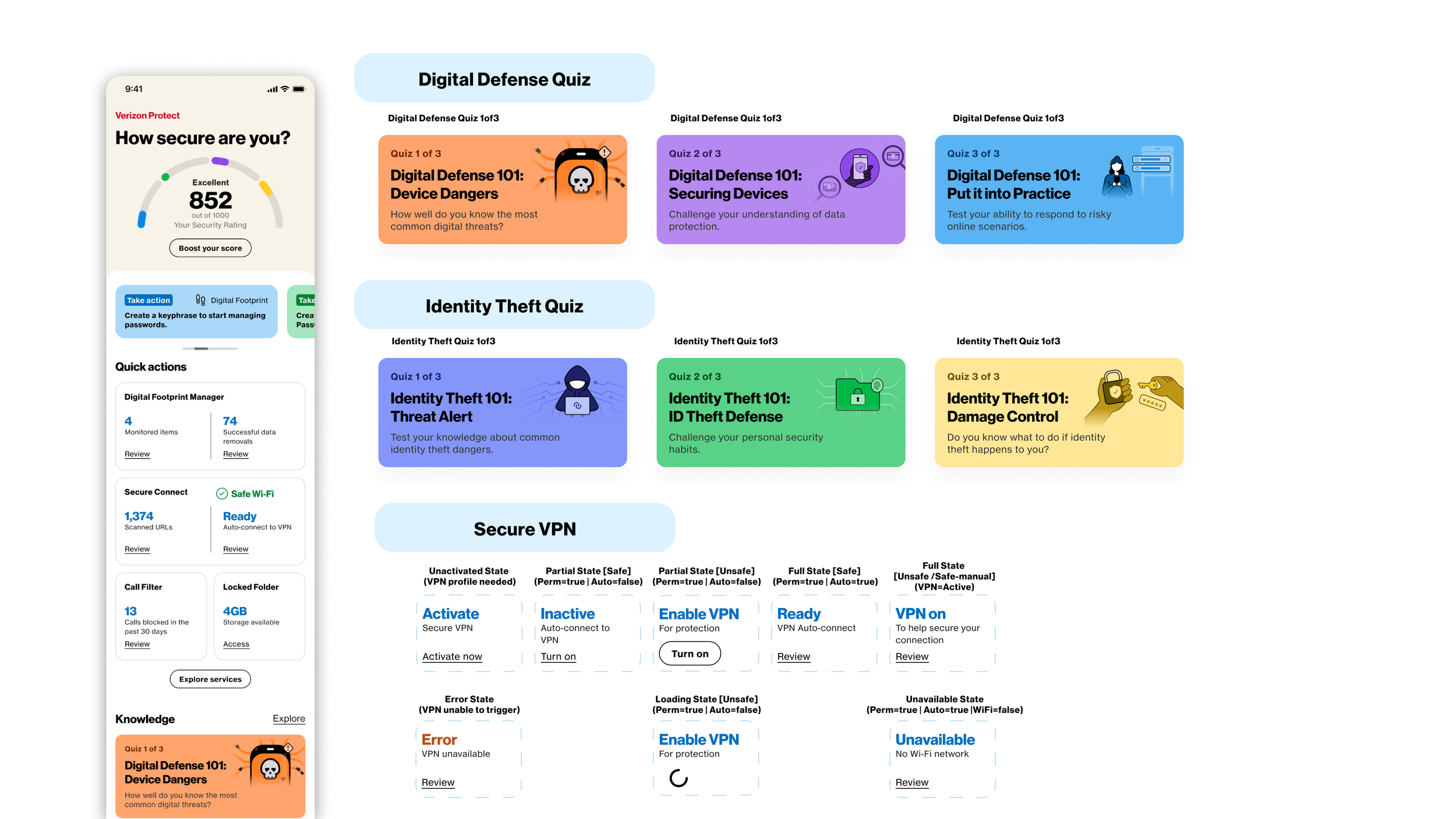
Action 1: Information Architecture:
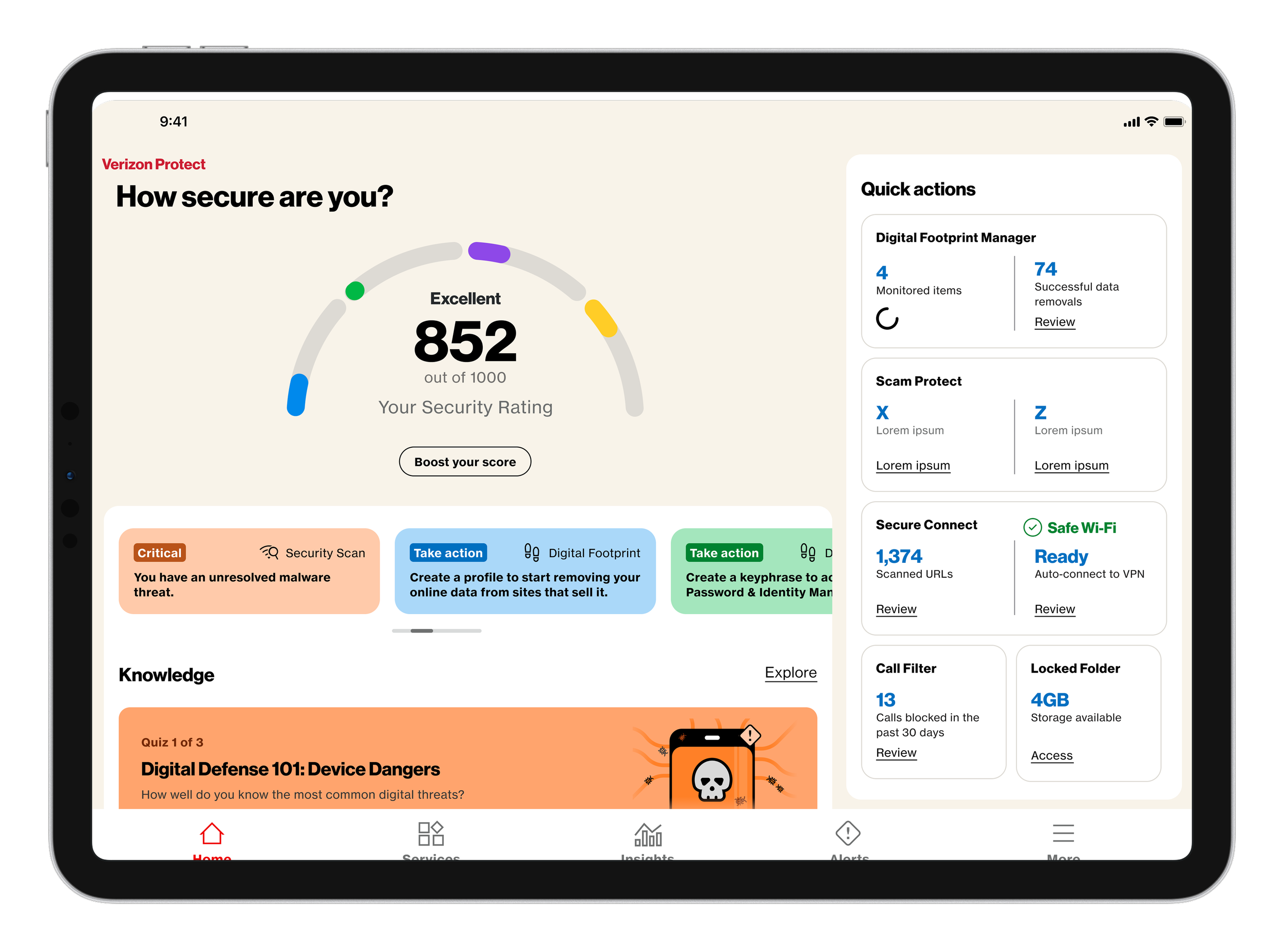
I developed the homepage framework including:
Security Score
Recommendations
Quick Actions
Service Cards
Personalization
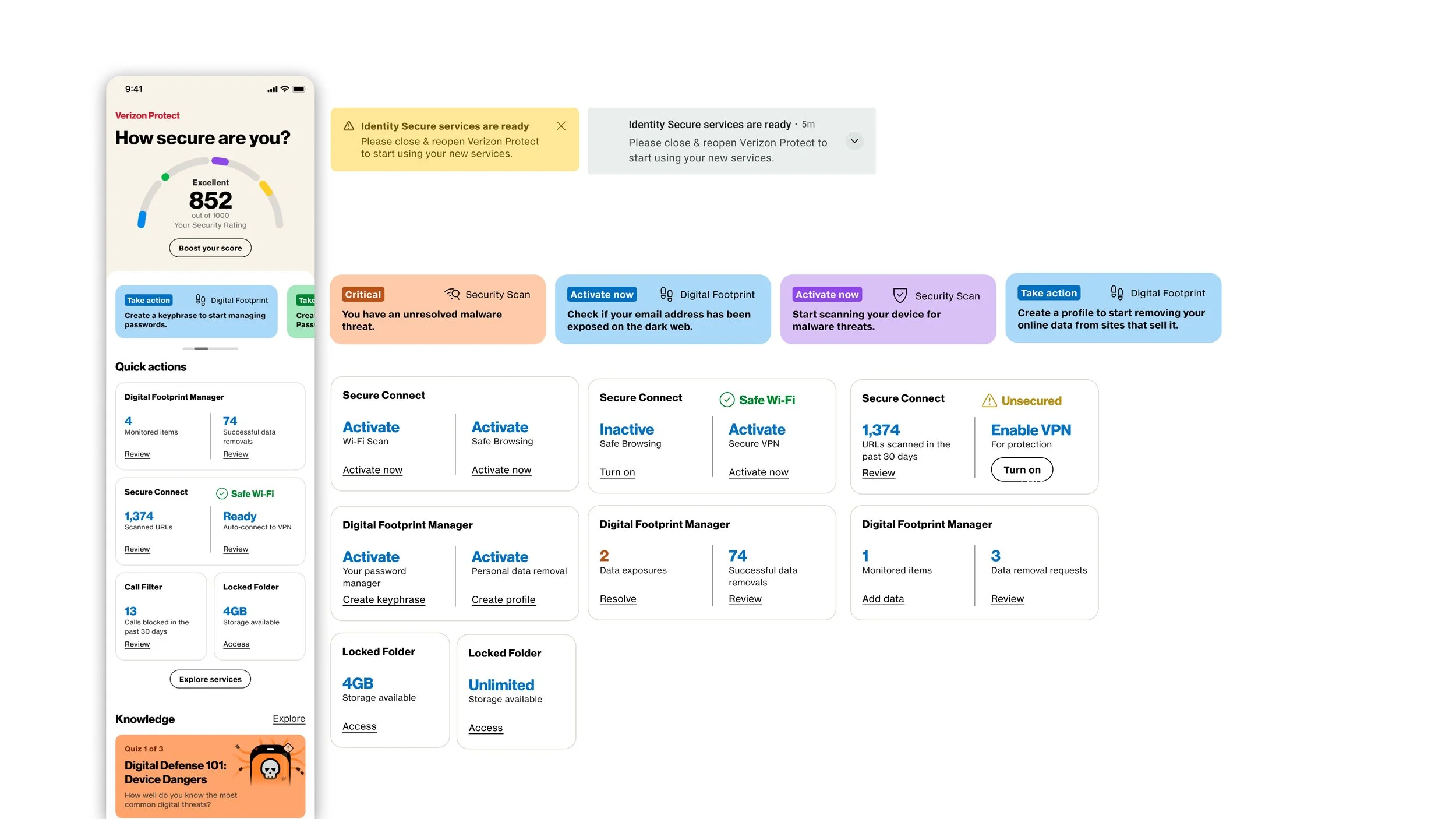
Action 2: Trust & Transparency
Focused on helping users understand and manage protection services
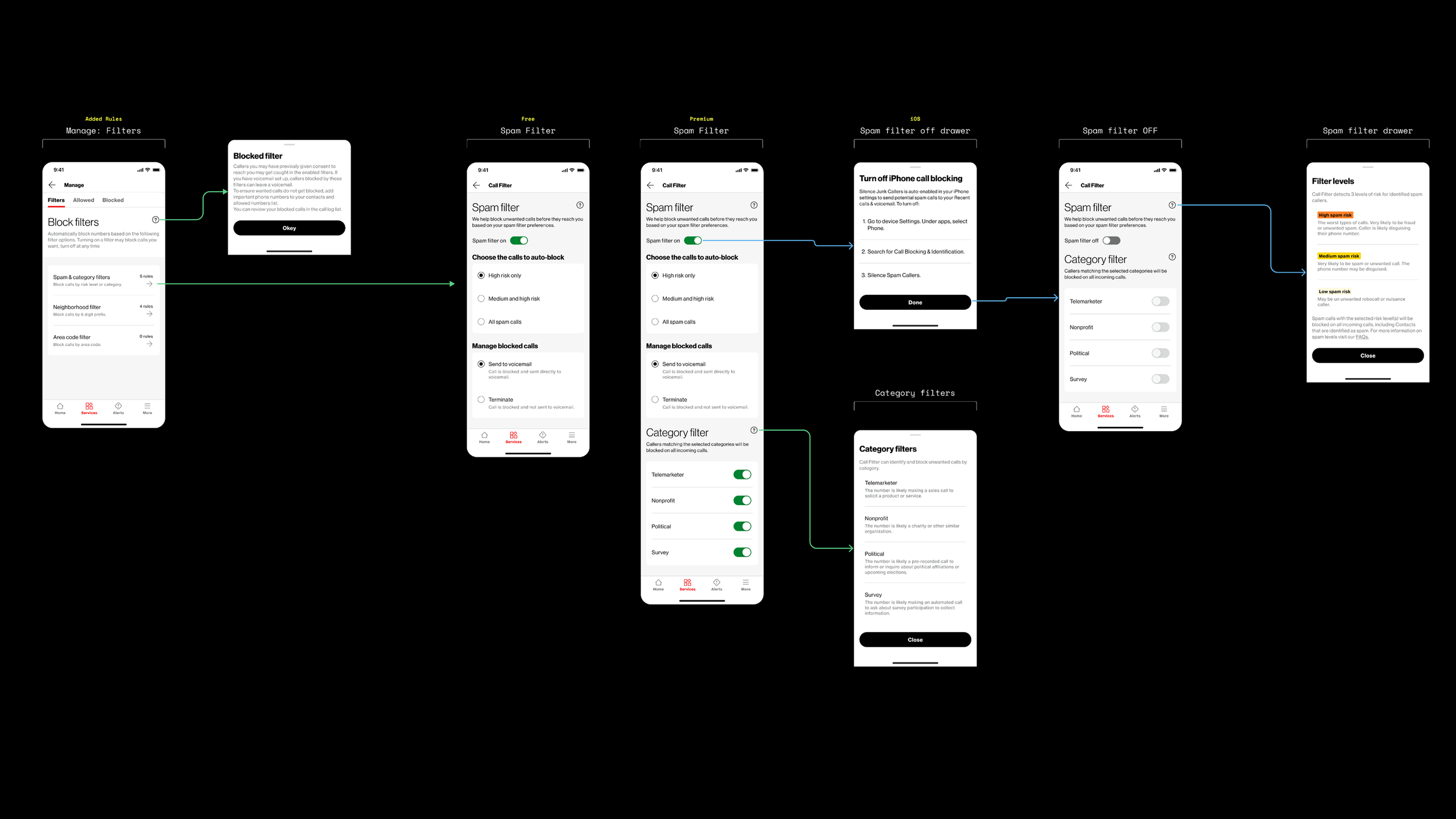
Action 3: User Advocacy
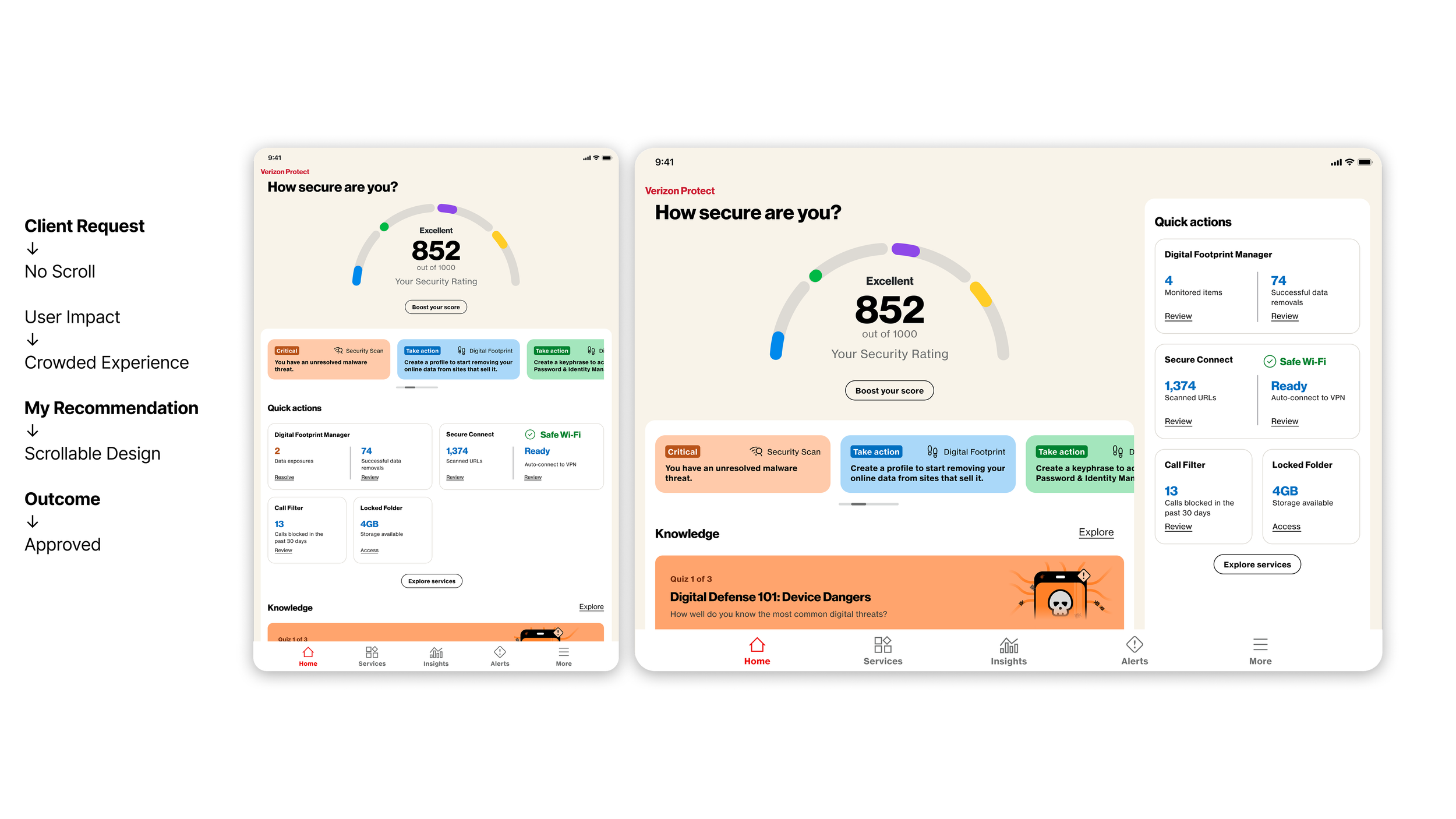
Advocated for a scrollable tablet experience despite stakeholder preference for fitting everything on one screen.
Results:
Created a scalable homepage framework capable of supporting multiple protection services.
Introduced personalized status cards, adaptive recommendations, and action-oriented security guidance.
Delivered end-to-end Call Filter experiences across platforms and subscription tiers.
Influenced the tablet experience direction by advocating for a user-centered solution over a constrained stakeholder request.
Established patterns that supported the continued growth of Verizon Protect's expanding security ecosystem.
Reflection/ What I learned
Security products succeed when users understand their protection, not when they see more information.
Personalization is most effective when paired with clear next actions.
Strong UX leadership sometimes means challenging requirements that negatively impact the user experience.