SMART
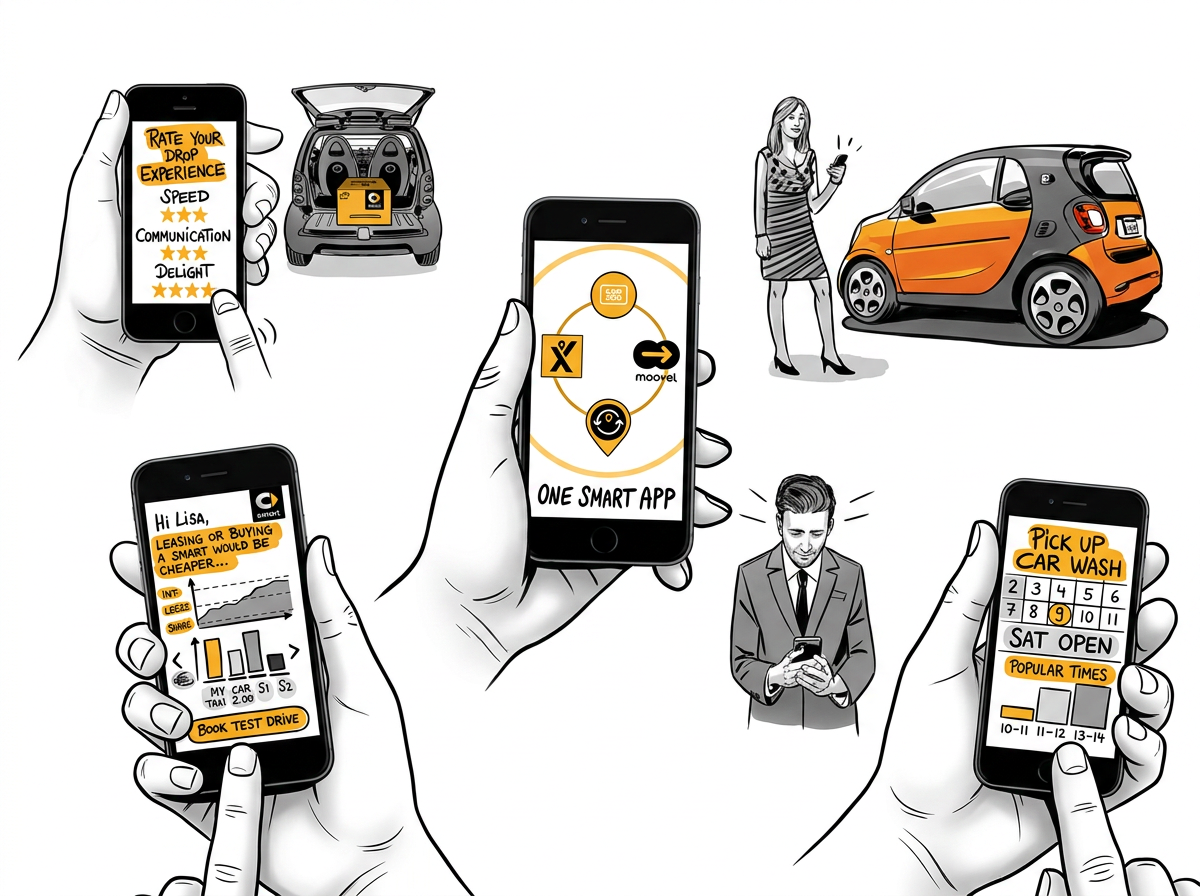
Role: UX Designer
Challenge: Design post-purchase owner experiences across all ownership phases, including the critical waiting period after ordering, that would build loyalty through meaningful services and personalized, multi-device interactions while integrating into Smart's unified digital ecosystem.
Year: 2019
Smart recognized that customer relationships didn't end at purchase. The challenge was designing a comprehensive owner experience that would create genuine value across all ownership phases (waiting, early ownership, mature ownership), serve diverse customer types, and keep customers engaged in the Smart ecosystem through personalized services and support. Smart services needed to become a foundation for loyalty and recurring engagement beyond the initial transaction.
Smart owners faced fragmented ownership experiences. After purchase, they lacked clear guidance during the waiting period, struggled to understand new vehicle features, had no unified way to manage maintenance, and felt disconnected from Smart as a brand. Meanwhile, Smart's ecosystem was immature: charging stations, connectivity, service partner integration, and digital tools didn't provide seamless, integrated experiences. Owners didn't see the relevance of engaging with Smart's digital channels, and behavioral change required tangible advantages.
The opportunity was to design a customer portal and integrated service offering that would demonstrate clear value at every ownership phase, reduce customer effort, and create ecosystem effects that benefit owners, dealers, service, and the brand.
Situation:
Task:
Design post-purchase owner experiences that would:
Serve diverse customer types and their specific needs across ownership phases (waiting, early ownership, mature ownership, seasonal, technical)
Create a personalized experience through coherent mix of functionality, content, and services targeted to model, owner, and lifecycle phase
Reduce customer effort and increase joy of use for critical ownership tasks (maintenance scheduling, service booking, vehicle personalization)
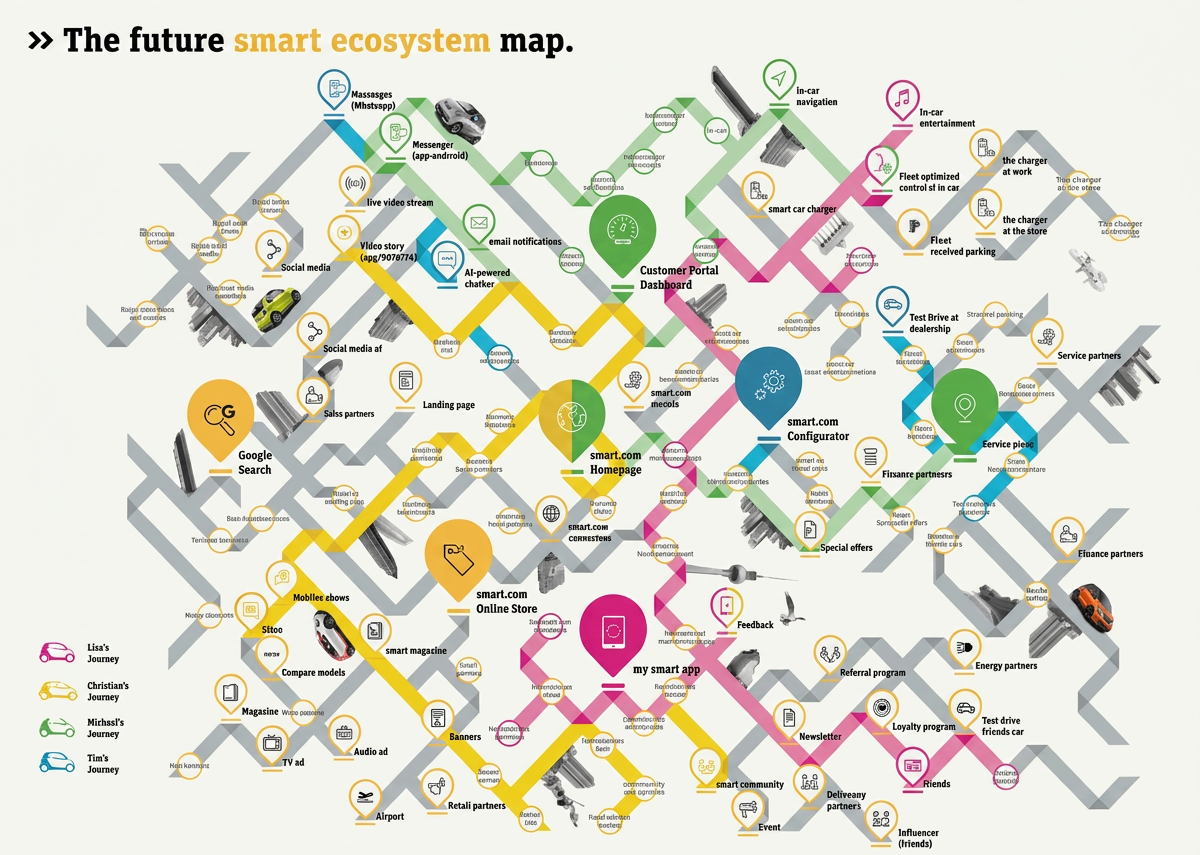
Embed the customer portal into an optimized information architecture for Smart's unified web platform
Enable network effects and peer-based value exchange across owners, dealers, and the brand
Establish clear success metrics around adoption, engagement, loyalty, and cross-selling
Immature ecosystem: charging stations, connectivity box, service partner integration not yet seamlessly integrated
Lack of relevance: unclear added value of portal to owners
Slow adoption: behavioral change requires tangible, compelling advantages
Multiple customer types with conflicting needs and preferences
Need to integrate portal into broader Smart One Web without creating fragmentation
Seamless navigation required across all devices and components
Balancing brand experience with practical, functional needs
Constraints:
Action:
Action 1: Deep Customer Research & Persona Development
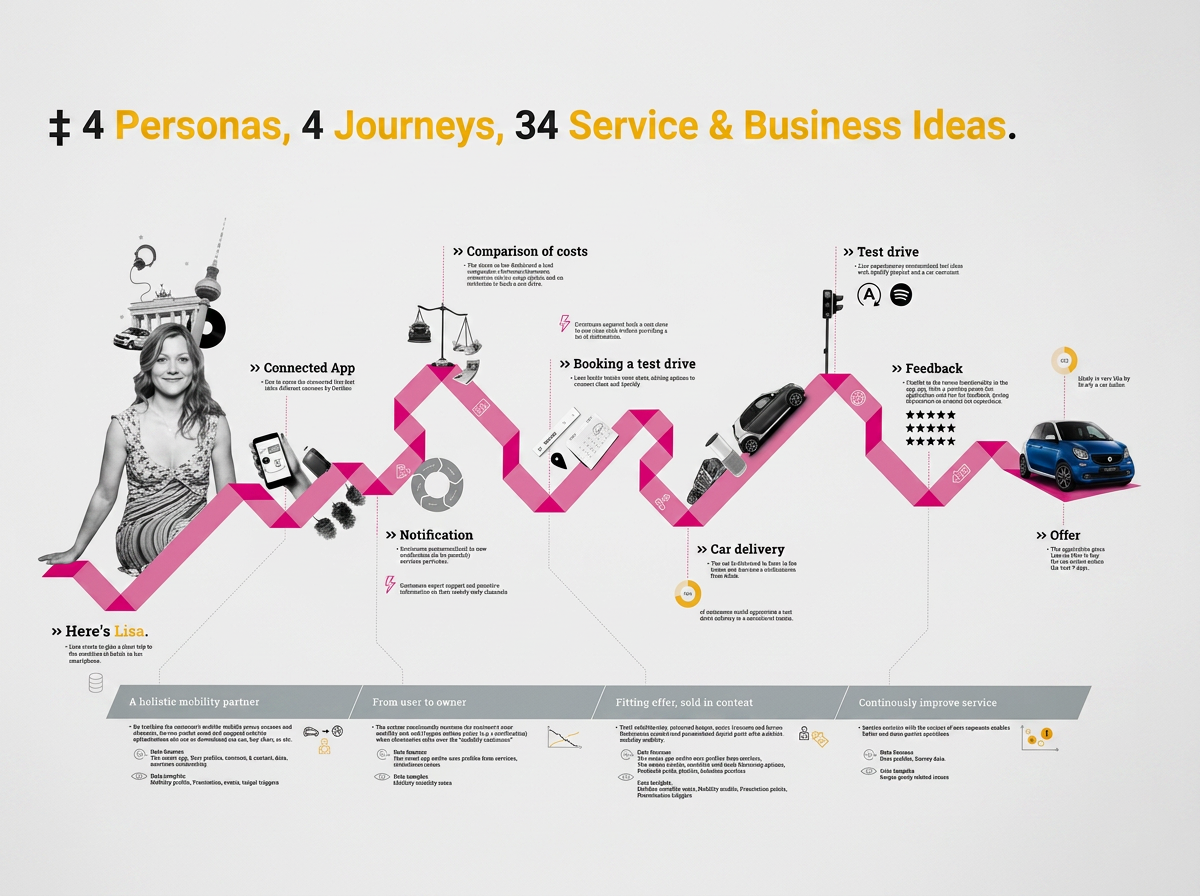
Conducted immersive guerrilla research including mystery shopping (Munich, October 2017), user interviews across SWISS, IT, CHINA, DE markets (N=9 per market, 31 total interviews), social listening on Smart purchase and ownership topics, and user segmentation across Germany, Smart Owner & Intenders (910 participants, 4 segments).
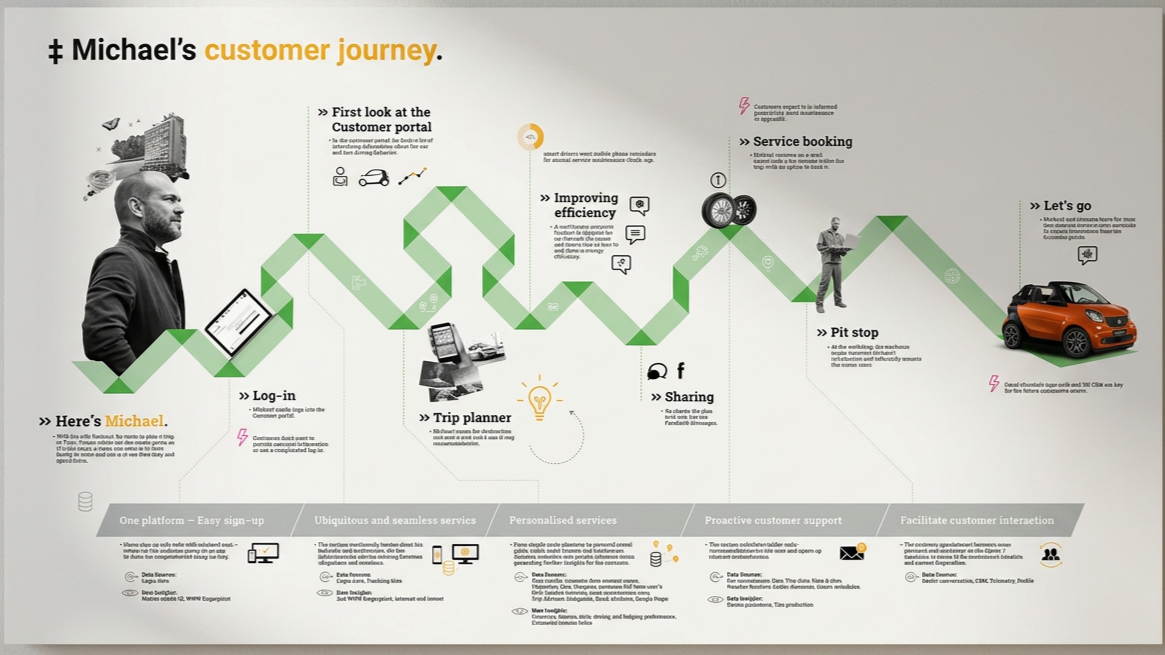
Created rich Michael Persona grounded in research, representing upper liberal segment with desires to optimize costs, driving, eco-footprint, and life. Identified critical insight: customers in early EV ownership have charging and reach insecurities, information gaps about ready-to-services, and expect 24/7 concierge assistant functionalities in preferred media.
Action 2: Jobs-to-be-Done Framework & Service Ideation
Synthesized research into three critical jobs owners wanted to accomplish:
When I have ordered my smart, I want to know delivery timeline, car appearance, and new features so I can be prepared for ownership
When managing daily life, I want effortless notifications about maintenance and services so I don't miss important tasks
When optimizing my smart usage, I want smart to recommend how my driving and usage could improve (costs, efficiency, eco-footprint)
Action 3: Service Concept Prioritization & Testing
Assessed service concepts against three value dimensions using weighted scoring: Service Goals (focus on electric drive), Business Value (monetizable, amortizable, organizational impact, prototipeable), Customer Value (useful, extrinsic needs coverage, intrinsic satisfaction).
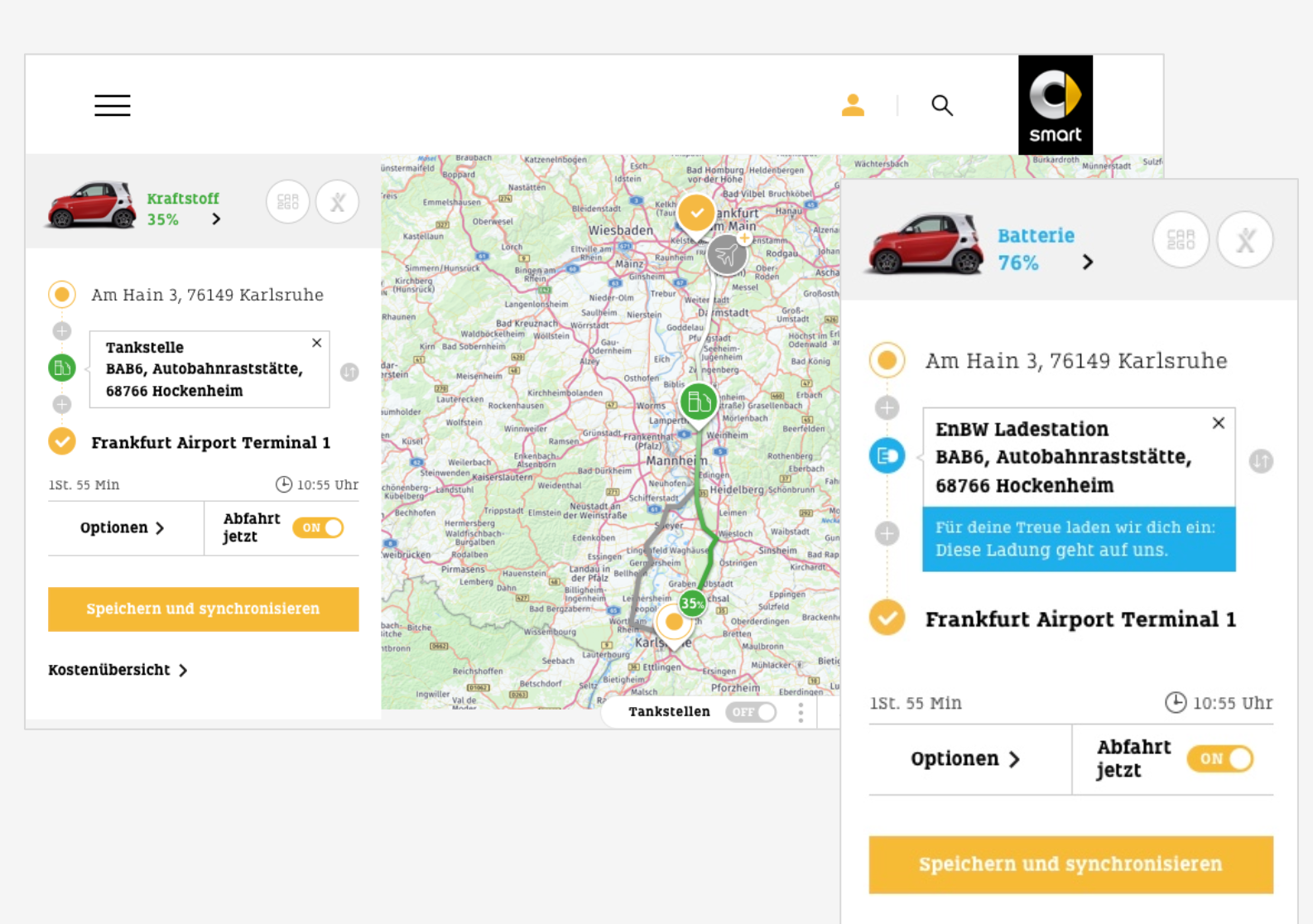
Identified Motion Mentor (42 points) and Trip Planner (39 points) as highest-priority pilots. Conducted rapid concept testing with real owners through paper prototypes and interactive mockups.
Action 4: Customer Portal Design & Information Architecture
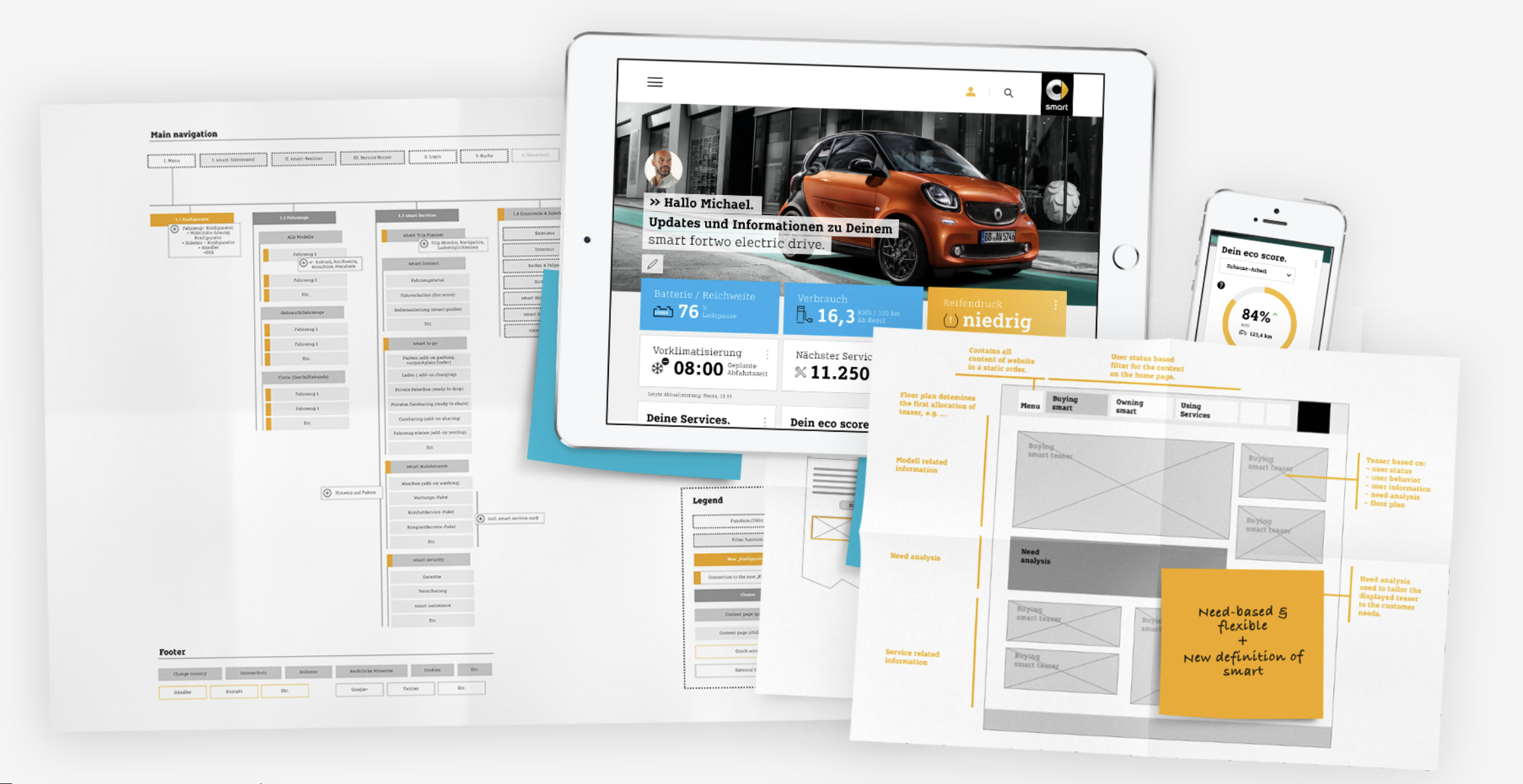
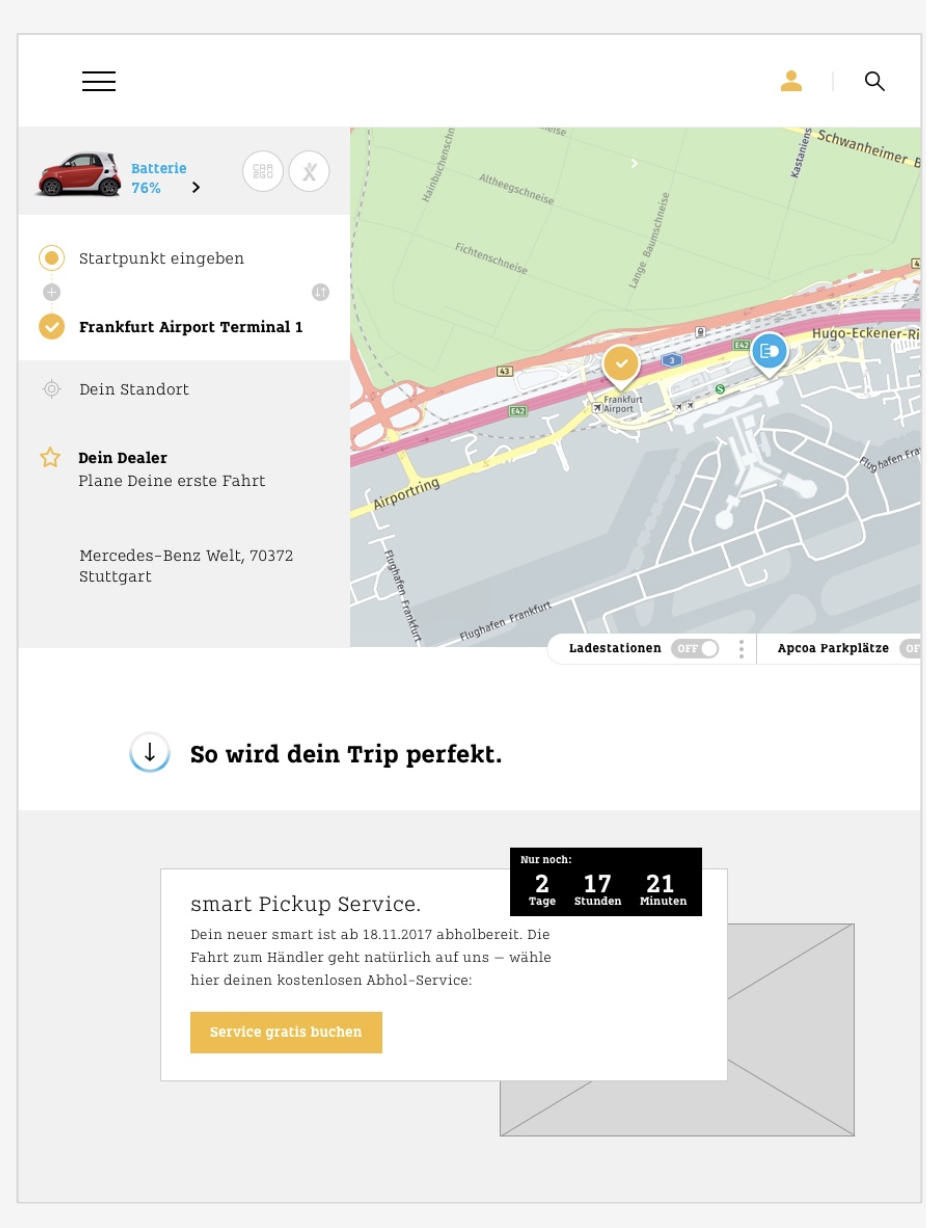
Designed integrated customer portal supporting personalized ownership data, service access, and lifecycle information across all devices. Created high-fidelity portal UI showing personalized dashboard (charging status, maintenance visibility, usage data, costs), service booking, owner communications, and vehicle personalization.
Established optimized information architecture for Smart One Web, ensuring seamless navigation across portal, online store, marketing content, and connected services. Designed for multiple customer types and ownership phases with contextual, personalized information.
Results:
Conducted comprehensive research across 4 markets with 910+ participants, uncovering deep insights into diverse ownership needs and pain points
Defined 7 strategic hypotheses about ownership value creation across phases, customer types, personalization, seamless navigation, ecosystem integration, network effects, and partner orchestration
Identified Michael Persona and Jobs-to-be-Done framework guiding service strategy
Designed high-fidelity customer portal with personalized, multi-device ownership experience
Prioritized service concepts and validated highest-impact pilots (Motion Mentor, Trip Planner) with user testing
Established design system and information architecture for Smart's unified customer ecosystem
Provided strategic roadmap for post-purchase loyalty, adoption, and ecosystem value creation
Positioned core message: "smart services for a better mobility experience" with core value of "loyalty by ownership support"
Ownership experiences require understanding the full lifecycle, not just purchase moment. Waiting phase creates critical first impression.
Service design works when it solves actual jobs customers want to accomplish, not when it just adds features.
Personalization and contextualization matter more than breadth. Showing the right information at the right lifecycle phase drives adoption.
Ecosystem thinking requires alignment across multiple stakeholders (owners, dealers, service, brand). Network effects emerge from coordinated value creation.
Research credibility enables organizational commitment. Data on customer pain points and unmet needs redirects strategy faster than stakeholder debate.